
Red Jalapeño Pasta with Cinnamon and Nutmeg
This Red Jalapeño Pasta with Cinnamon and Nutmeg is a dish I developed to highlight how restrained spice and careful technique can transform a simple pasta into something layered and memorable. Rather than relying on heavy sauces or cream, this recipe focuses on oil, aromatics, and pasta water to create a light yet deeply flavored coating that clings to your pasta.
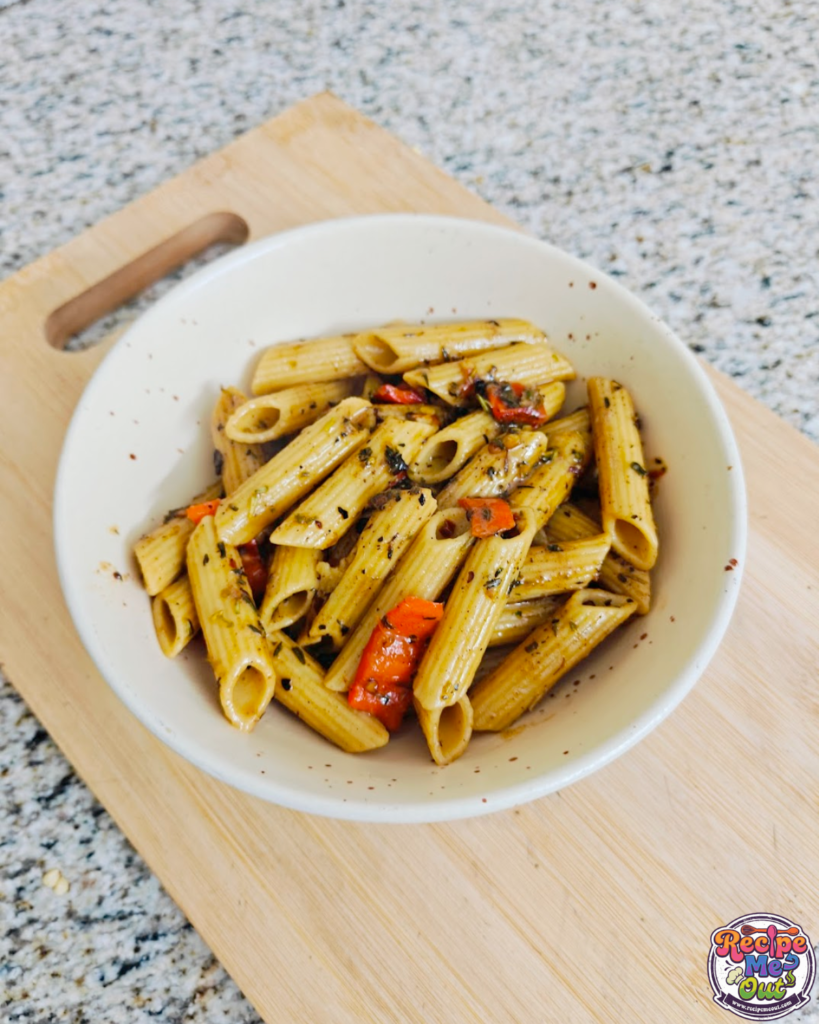
The heat comes primarily from red jalapeños and chili flakes, offering both freshness and warmth without overwhelming the palate. What sets this dish apart, however, is the subtle use of cinnamon and nutmeg. Added in precise amounts, they don’t dominate or sweeten the dish; instead, they provide quiet depth and warmth, enhancing the savory elements and balancing the heat. These spices work in the background, rounding out the flavor profile and giving the pasta an unexpected complexity.
If you are looking for nuanced seasoning, clean technique, and bold flavors, this Red Jalapeño Pasta is ideal for you.
Ingredients
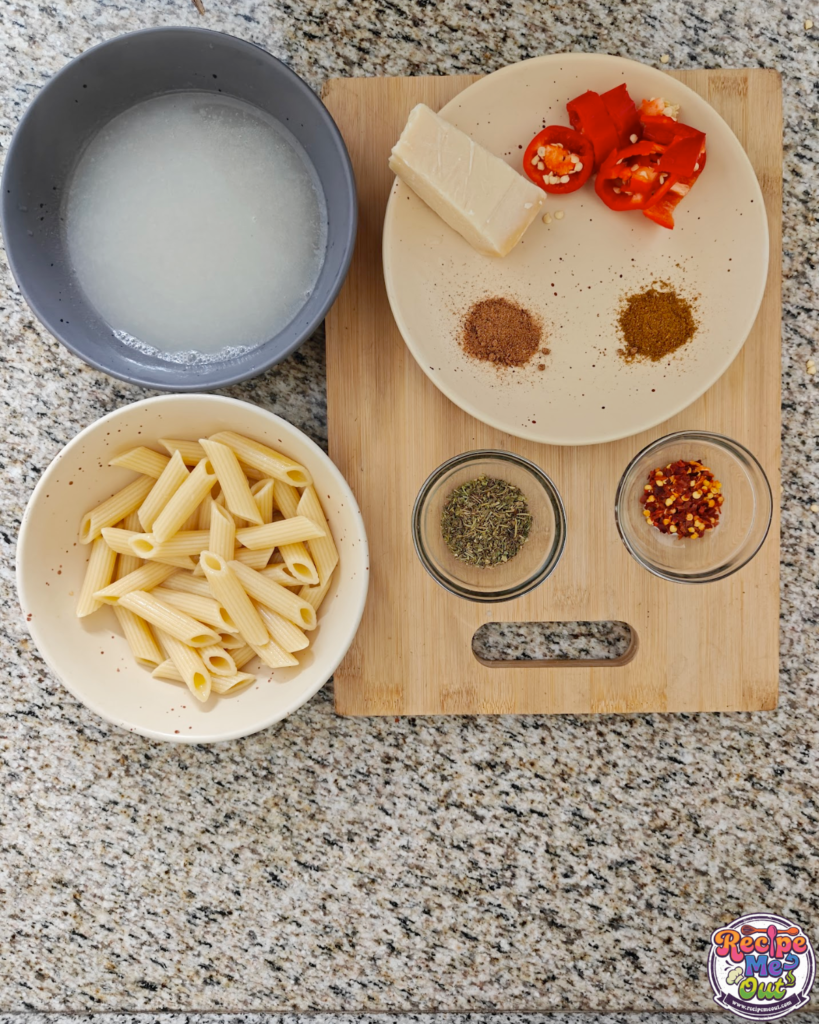
- Pasta (Penne or Spaghetti) – Acts as the main body of the dish. Undercooking lets it finish cooking in the sauce so it absorbs flavor instead of turning mushy.
- Pasta Water – Creates moisture for a light sauce. Pasta water’s starch helps bind everything together and coat the pasta.
- Chilli Flakes – Provide heat and mild smokiness; frying them in oil blooms their flavor.
- Nutmeg Powder – Adds subtle warmth and depth. Used sparingly, it enhances savory notes and gives a rounded, almost creamy background flavor without being identifiable.
- Cinnamon Powder – Contributes gentle sweetness and warmth. It balances heat from chilies and adds complexity, giving the dish a slightly exotic, aromatic edge when used in very small amounts.
- Red Jalapenos – Add fresh heat, slight sweetness, and texture contrast.
- Oregano and Thyme Mixture (50% dried oregano and 50% dried thyme) – Oregano adds earthy, slightly bitter herbal notes. Thyme adds warmth and subtle sweetness; balances spice and heat.
- Salt
- Olive Oil
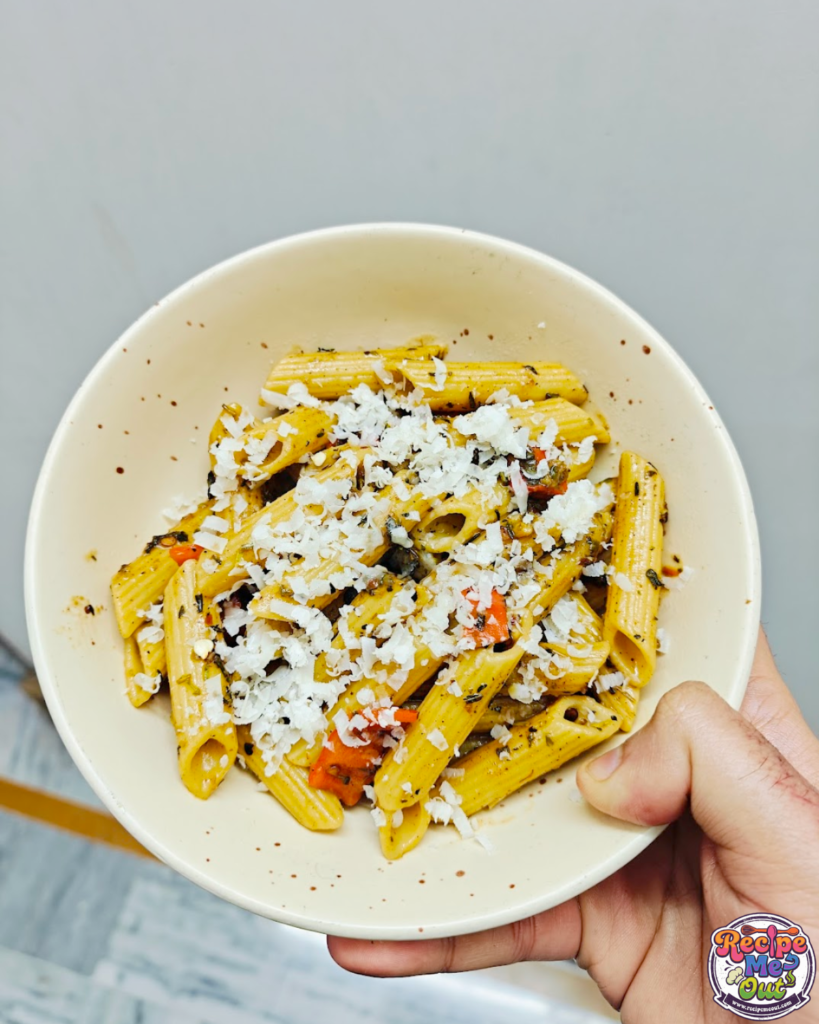
- Freshly Grated Parmesan Cheese (For Serving) – Now I tried the pasta both with this parmesan and without, and honestly, I liked the one without it. But to each it’s own.
How To Make Red Jalapeno Pasta Recipe?
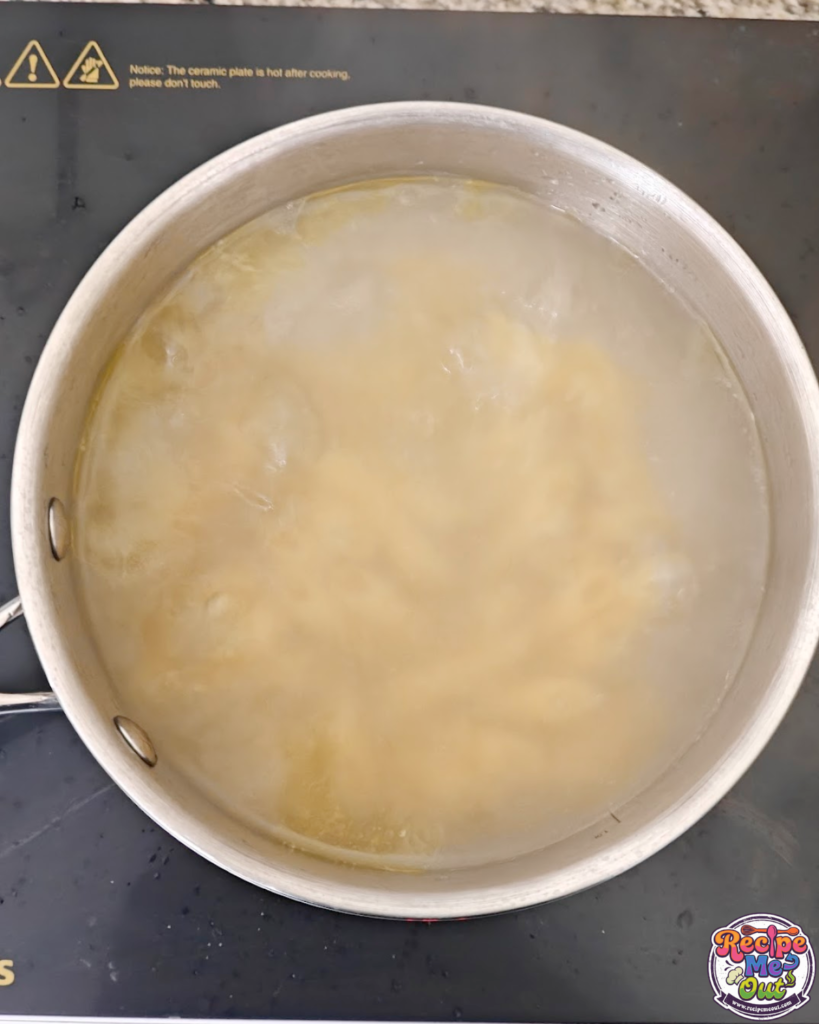
Start by boiling a large pot of well-salted water. Once the water is at a rolling boil, add the pasta and cook it until it is about 70–80% done—this means it should still have a noticeable bite and not be fully soft. Stir occasionally to prevent sticking. Before draining, reserve some of the pasta water, as this starchy liquid will help bring everything together later. Drain the pasta and set it aside.
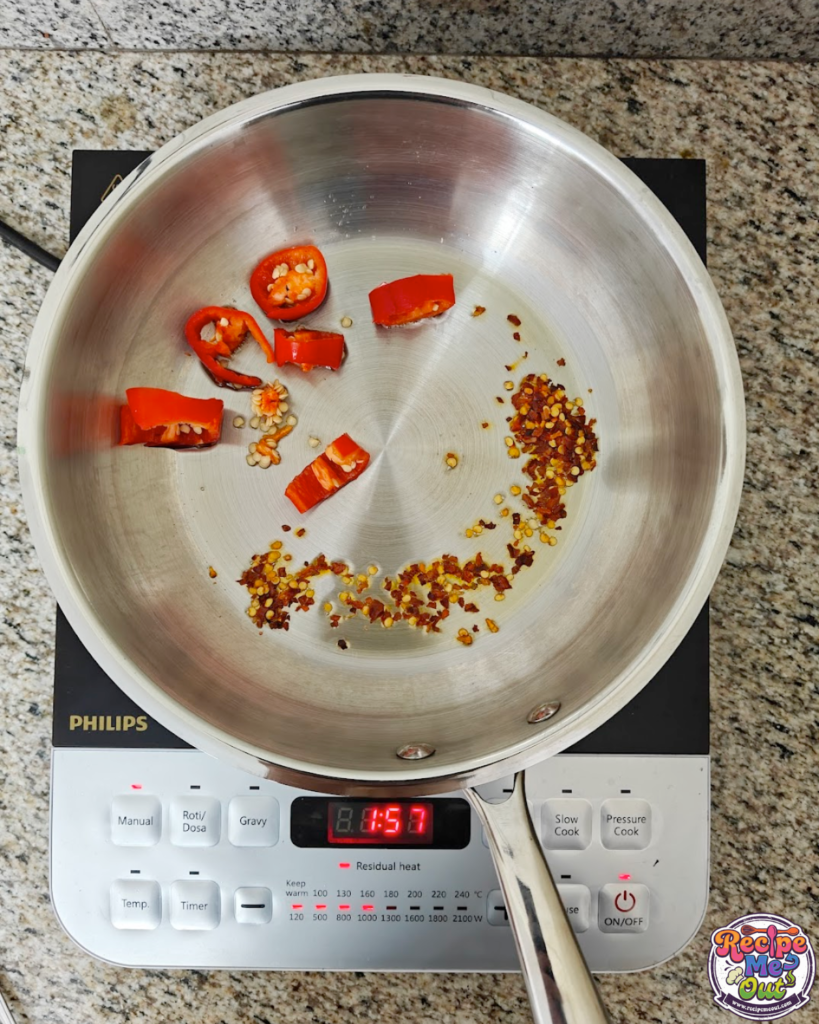
Next, place a pan over medium heat and add oil, allowing it to warm up gently. Once the oil is hot, add the chilli flakes and red jalapeños. Sauté them briefly, stirring constantly, so they release their heat and flavor into the oil without burning. This step forms the flavor base of the dish, so keep the heat controlled and let the aromatics infuse the oil evenly.
After that, add the cinnamon and nutmeg powder. Add water if the spices stick to the pan.
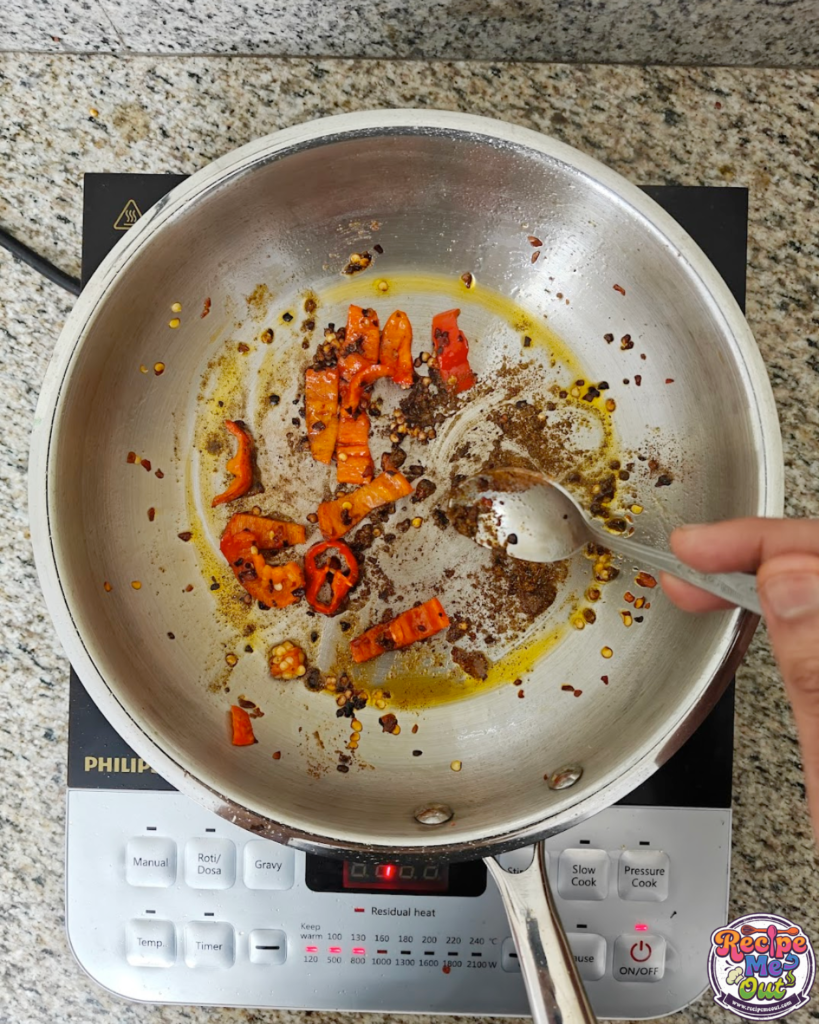
After the chillies are fragrant, add a small splash of water or the reserved pasta water to the pan. This helps deglaze the pan and prevents the spices from scorching. Let the liquid simmer lightly for a moment, allowing the flavors to blend and mellow slightly.
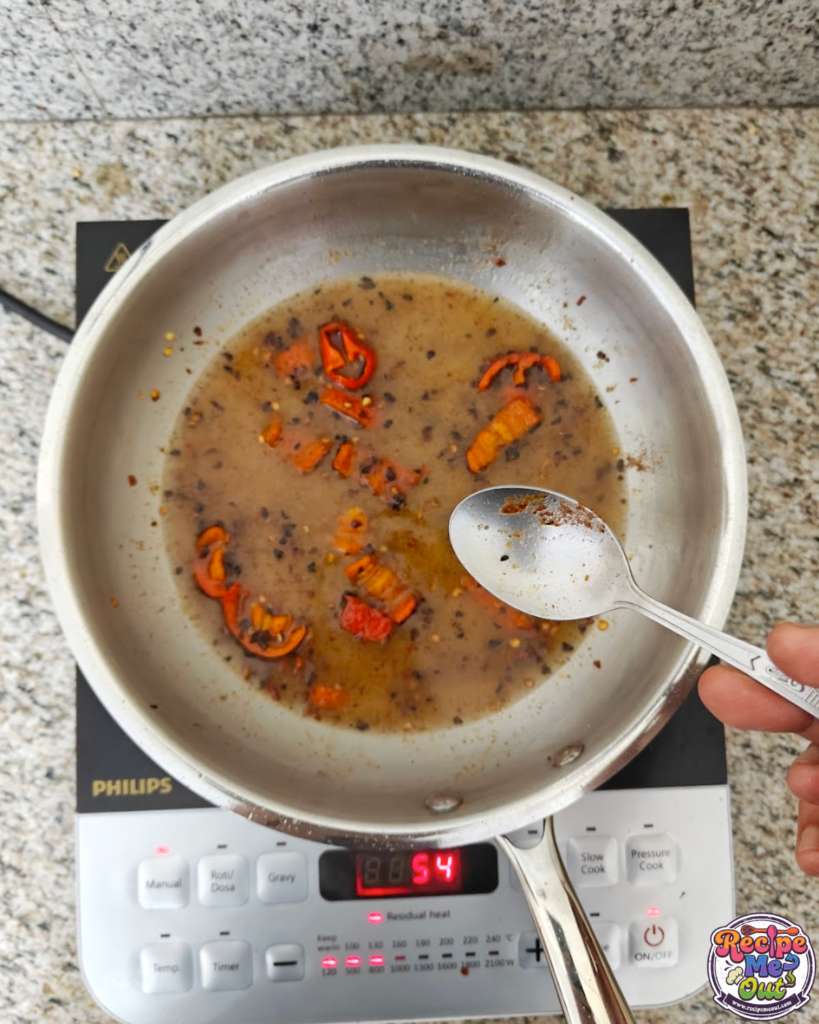
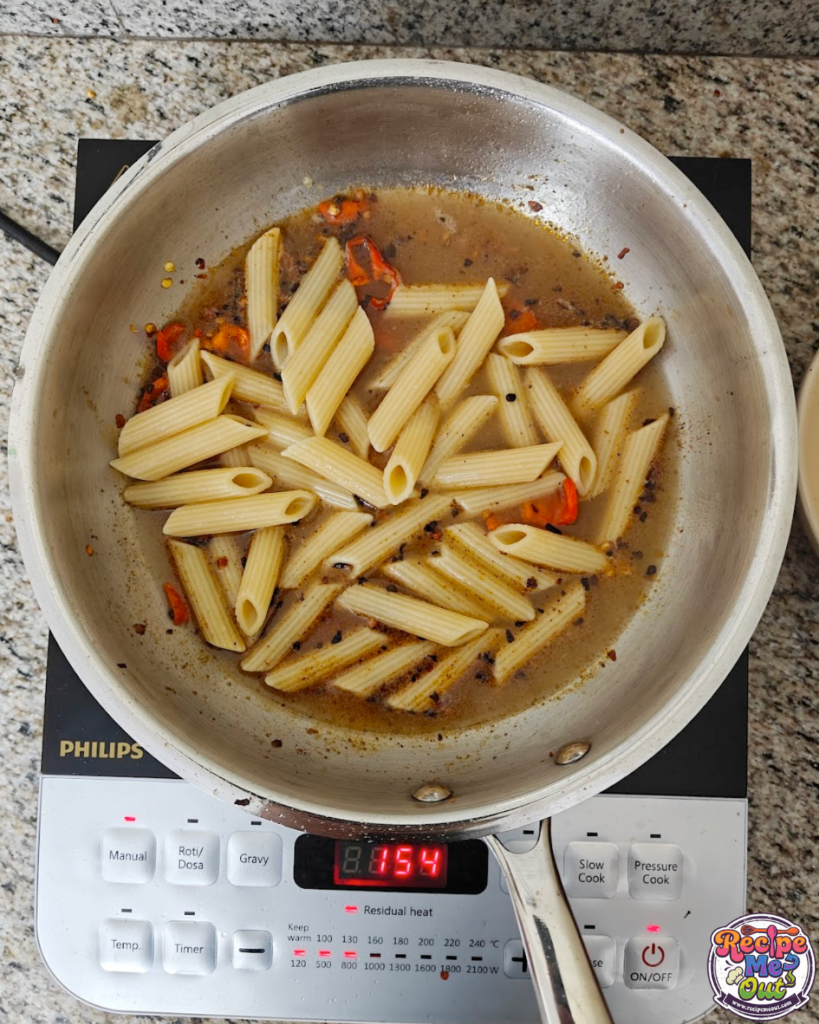
Now add the partially cooked pasta directly into the pan. Toss it well so each piece is coated in the chilli-infused liquid.
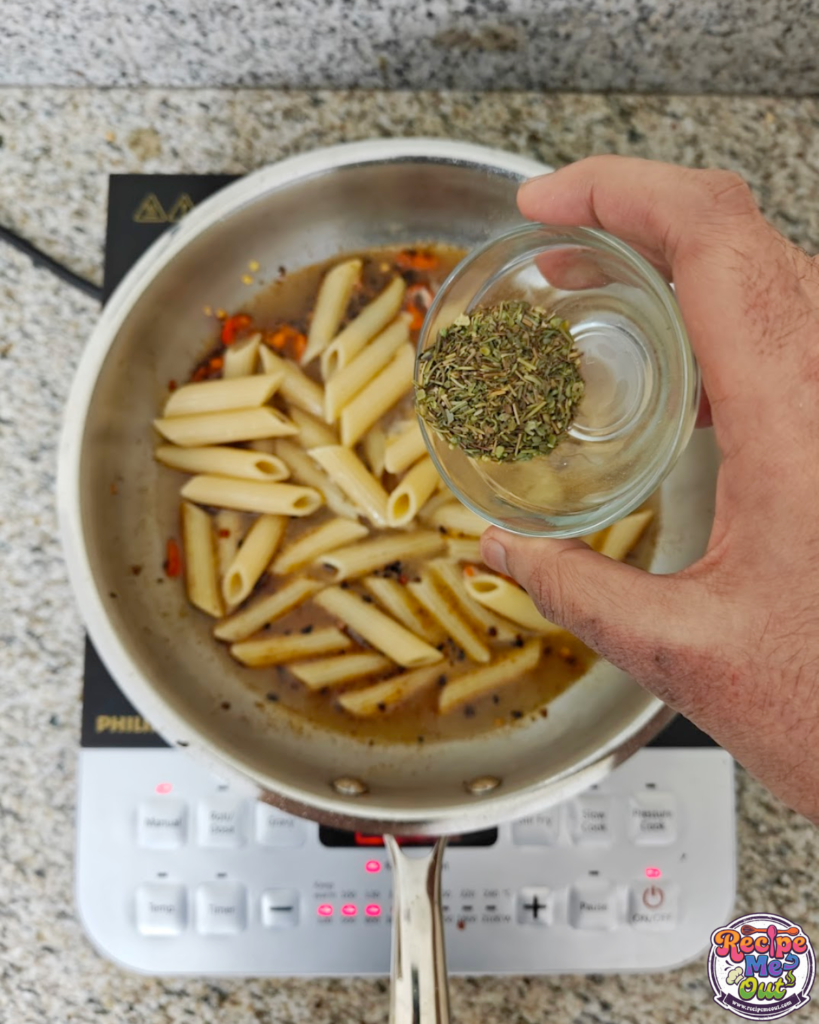
Sprinkle in the oregano and thyme mixture, distributing it evenly throughout the pasta. These herbs will add an earthy, aromatic note that balances the heat from the chillies.
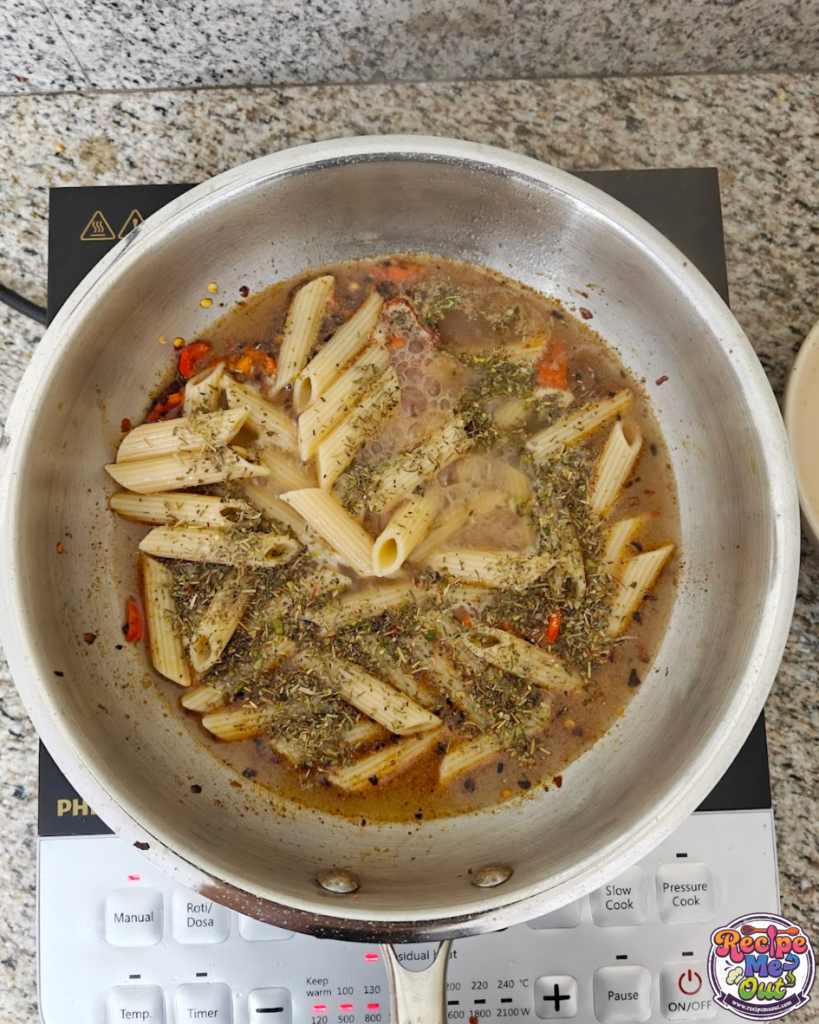
Add a bit more pasta water and continue cooking the pasta in the pan over medium heat. Stir occasionally and let the pasta absorb the liquid gradually.
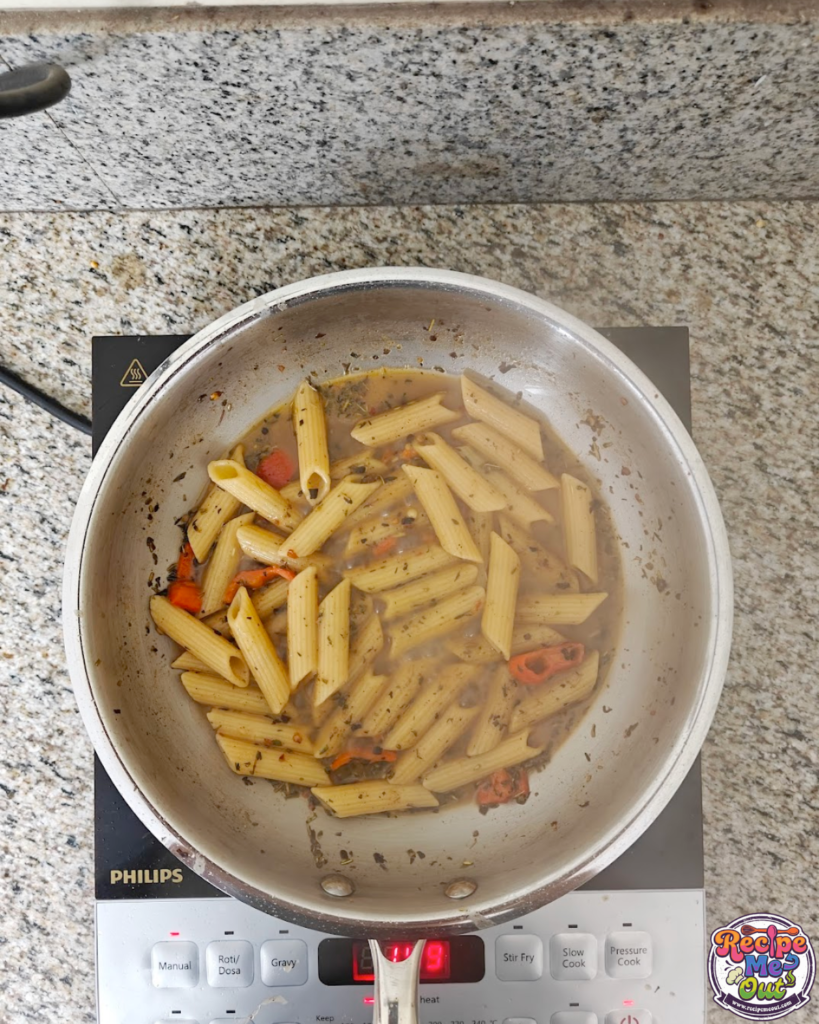
As the water reduces, it will cling to the pasta, creating a light, glossy coating rather than a sauce.
Keep cooking until the pasta is fully done, the liquid has mostly evaporated, and everything looks well combined and dry, with the flavors absorbed into the pasta.
Remove from heat and serve immediately.
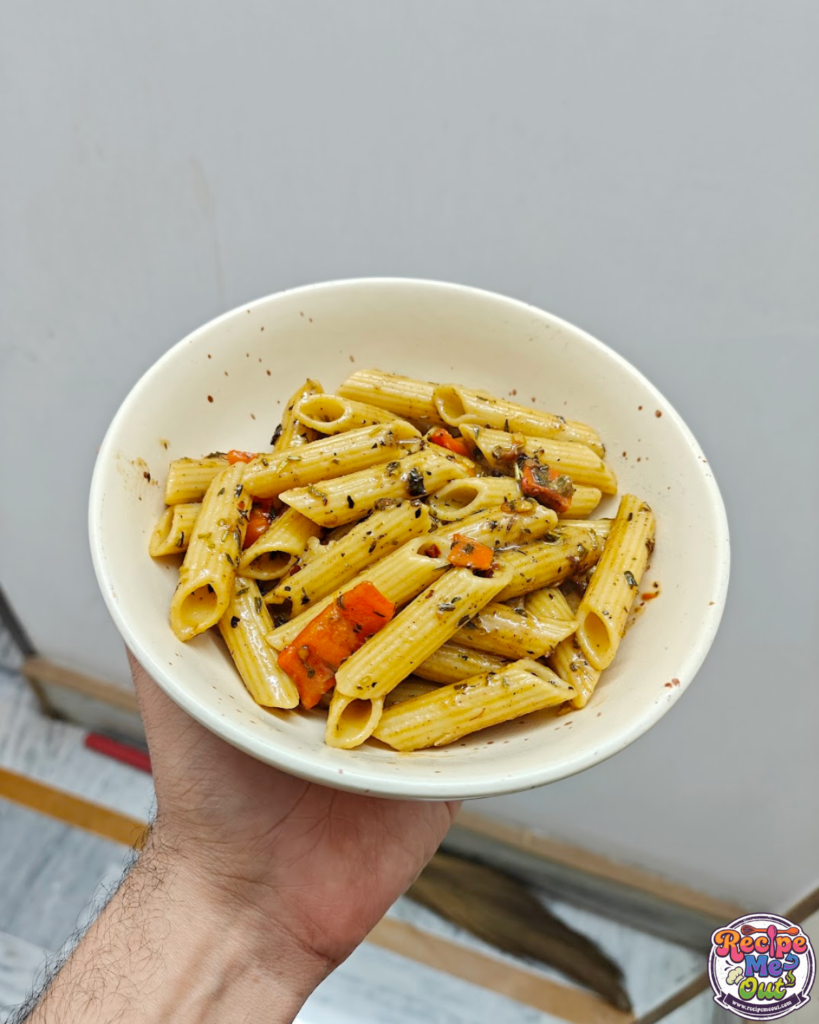
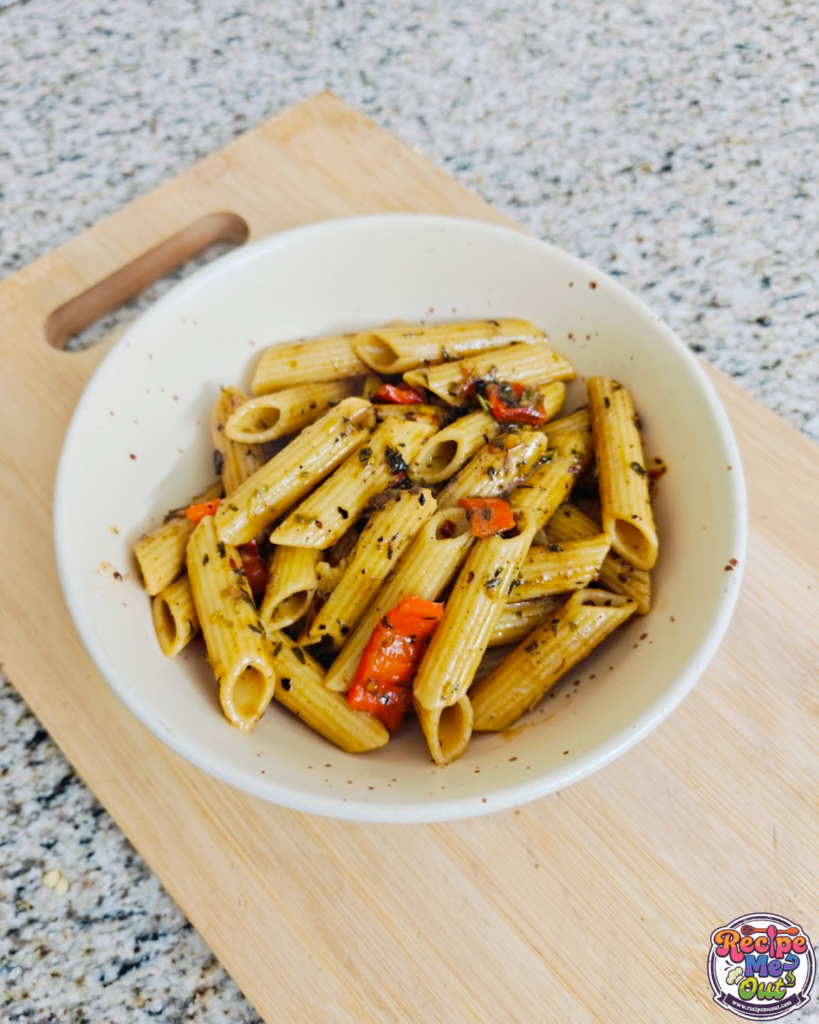
Add grated Parmesan on top if you want.
FAQs
Yes, green jalapeños can be used if red ones are not available. However, red jalapeños are slightly sweeter and milder, which helps balance the spices in this recipe. Green jalapeños will make the pasta a bit sharper and more intense.
No. When used in very small amounts, cinnamon and nutmeg do not make the dish sweet. Instead, they add subtle warmth and depth that enhances the savory flavors and balances the heat from the chilies.
Undercooking the pasta allows it to finish cooking in the pan with the sauce. This helps the pasta absorb the flavors from the chili oil and spices while preventing it from becoming overly soft.
Pasta water contains starch released from the pasta during cooking. This starch helps emulsify the oil and spices, creating a light coating that clings to the pasta instead of forming a heavy sauce.
No, Parmesan is optional. The pasta has enough flavor from the chili, herbs, and spices to stand on its own, but grated Parmesan can add a salty, savory finish if you prefer.
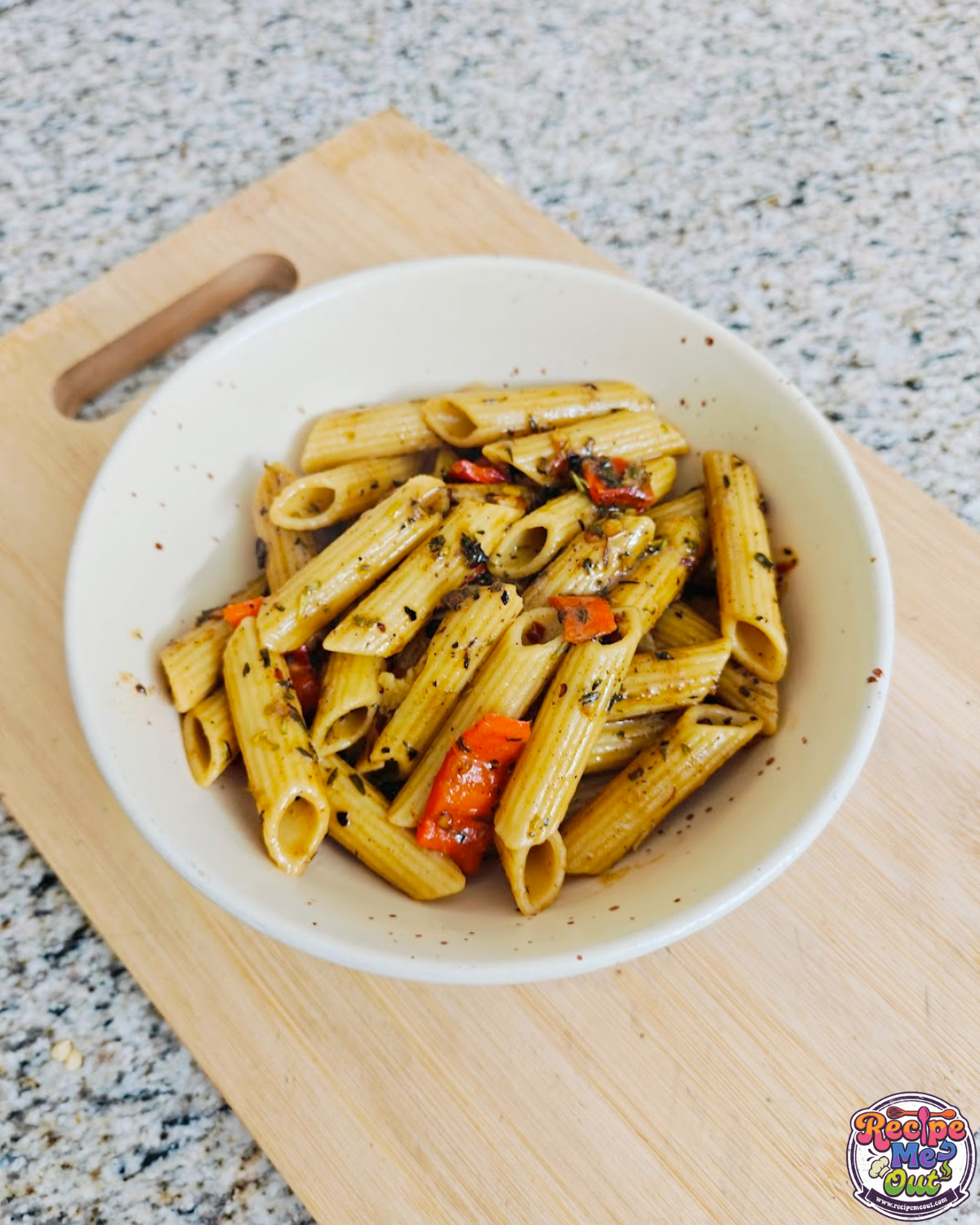
Red Jalapeño Pasta with Cinnamon and Nutmeg
Ingredients
- 100 g pasta penne or spaghetti
- 1 tbsp olive oil
- 1 red jalapeños sliced
- ½ tsp chili flakes
- ¼ tsp cinnamon powder
- ¼ tsp nutmeg powder
- 1 tsp oregano and thyme mixture ½ tsp oregano + ½ tsp thyme
- Salt to taste
- ½ cup reserved pasta water as needed
- Freshly grated Parmesan cheese optional, for serving
Instructions
- Bring a large pot of well-salted water to a rolling boil. Add the pasta and cook until 70–80% done, leaving a firm bite.
- Before draining, reserve about 1 cup of pasta water. Drain the pasta and set aside.
- Heat olive oil in a pan over medium heat.
- Add the chili flakes and sliced red jalapeños and sauté briefly, stirring continuously so they release flavor into the oil without burning.
- Add the cinnamon and nutmeg powder. If the spices begin sticking to the pan, add a small splash of water or pasta water.
- Pour in a small amount of reserved pasta water to deglaze the pan and allow the flavors to blend.
- Add the partially cooked pasta to the pan and toss to coat it in the chili-infused liquid.
- Sprinkle in the oregano and thyme mixture and mix evenly.
- Add more pasta water as needed and continue cooking the pasta over medium heat, stirring occasionally.
- Allow the liquid to reduce gradually so it forms a light, glossy coating on the pasta instead of a heavy sauce.
- Cook until the pasta is fully done and most of the liquid has evaporated.
- Remove from heat and serve immediately.
- Top with freshly grated Parmesan cheese if desired.
Notes
- Cooking the pasta slightly underdone allows it to absorb flavor as it finishes cooking in the pan.
- Cinnamon and nutmeg should be used very sparingly to add subtle warmth rather than sweetness.
- Pasta water is essential for binding the oil and spices into a light sauce.