
Alfredo Sauce
My OG Alfredo Sauce Recipe is here.
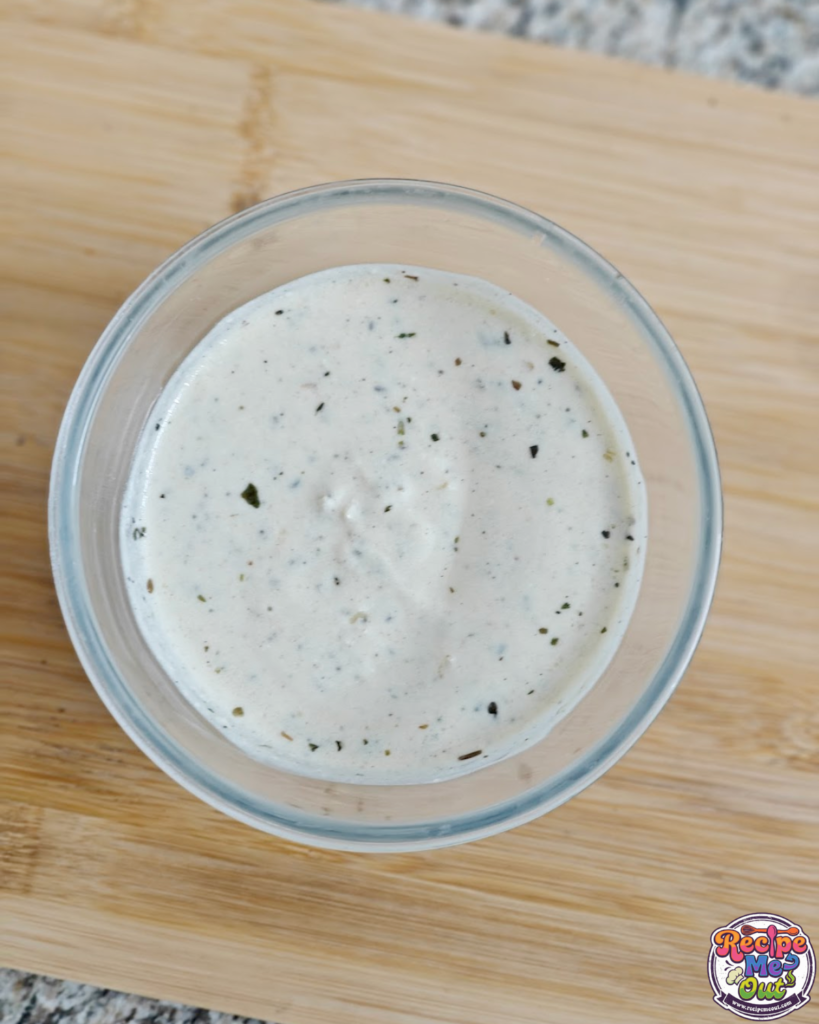
When done well, this classic sauce transforms a handful of everyday ingredients into something rich, elegant, and deeply satisfying. I appreciate Alfredo Sauce for its versatility—it can elevate a simple bowl of pasta, complement vegetables or proteins, and serve as a reliable foundation for countless variations, all while maintaining its signature creamy texture.
In developing this recipe, my goal was to create an Alfredo Sauce that is both authentic and approachable. I focused on technique as much as ingredients, ensuring the sauce achieves a smooth, luxurious consistency without feeling super heavy or overwhelming.
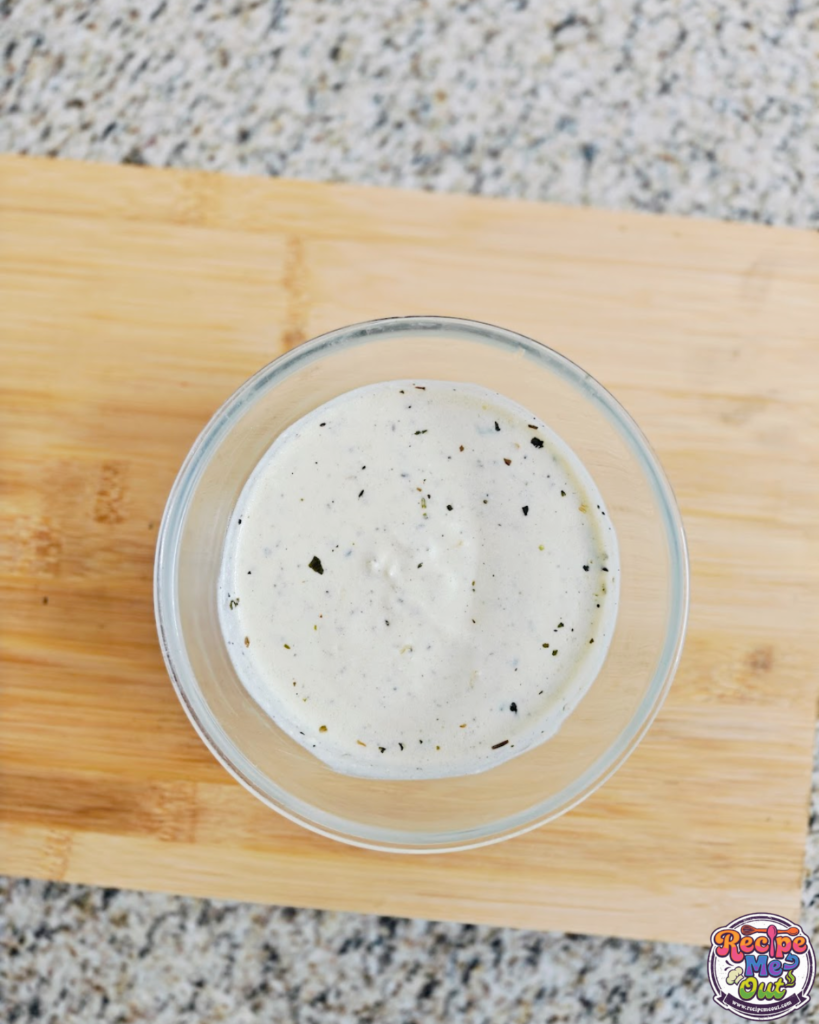
By the way, this recipe is designed for home cooks who value quality and consistency but also want a dependable result every time. Once cooked, you can store it in the fridge for a good solid 4-5 days.
However, do note that this recipe is not for someone who is super health conscious.
Ingredients
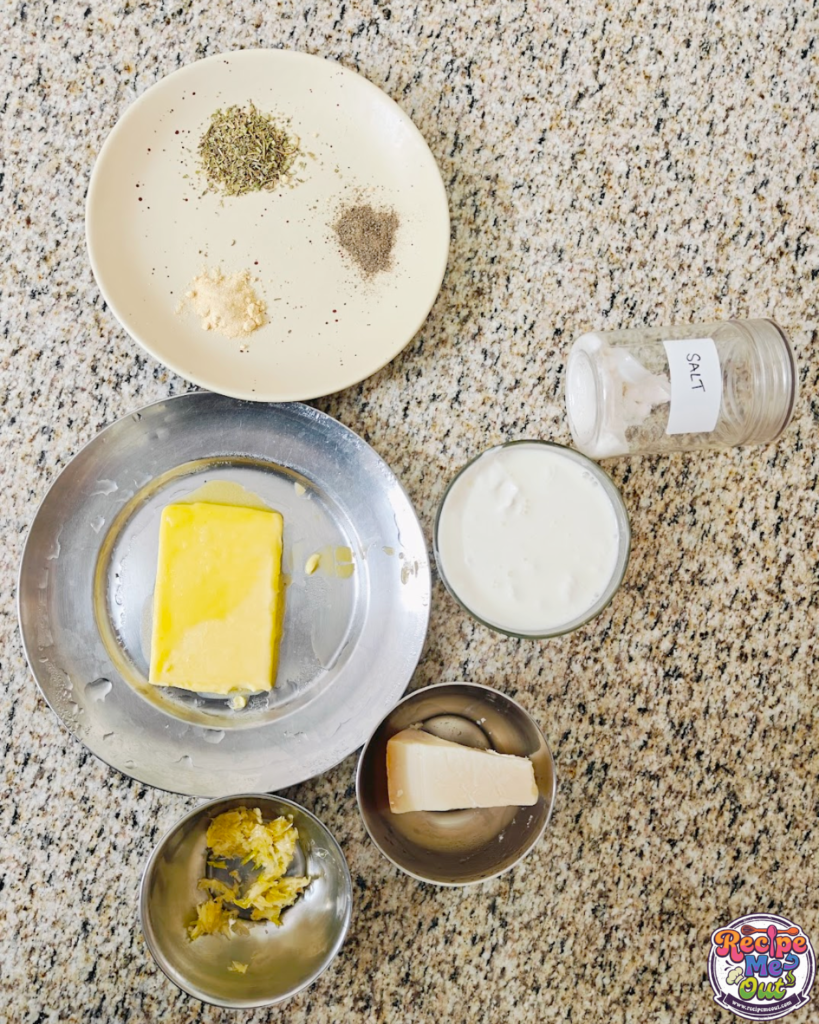
- Unsalted Butter – Forms the base of the sauce, adds richness and silkiness, and allows you to control the salt level precisely.
- Heavy Cream or Low Fat Cream with 25% Fat – Provides the signature creamy body of this Alfredo sauce. Heavy cream gives a richer result, while 25% cream keeps it slightly lighter without sacrificing texture.
- Minced Garlic – Adds aromatic depth and savory warmth, forming the flavor backbone of the sauce.
- Parmesan Cheese – Brings umami, saltiness, and thickness. It melts into the cream to create that classic Alfredo richness.
- Garlic Powder – Enhances and reinforces the garlic flavor evenly throughout the sauce without overpowering it.
- Black Pepper – Adds subtle heat and balances the richness of the butter, cream, and cheese.
- Dried Herbs (⅓ Rosemary, ⅓ Thyme and ⅓ Basil) – Introduce earthy, herbaceous notes that elevate the sauce and add complexity without distracting from the creaminess.
- Salt – only put as required.
How To Make Alfredo Sauce?
Start by heating a wide, heavy-bottomed pan over low to medium heat.
This is important because Alfredo sauce is delicate—high heat can cause the fat to separate later on. Once the pan is warm (not smoking), add the unsalted butter and allow it to melt slowly.
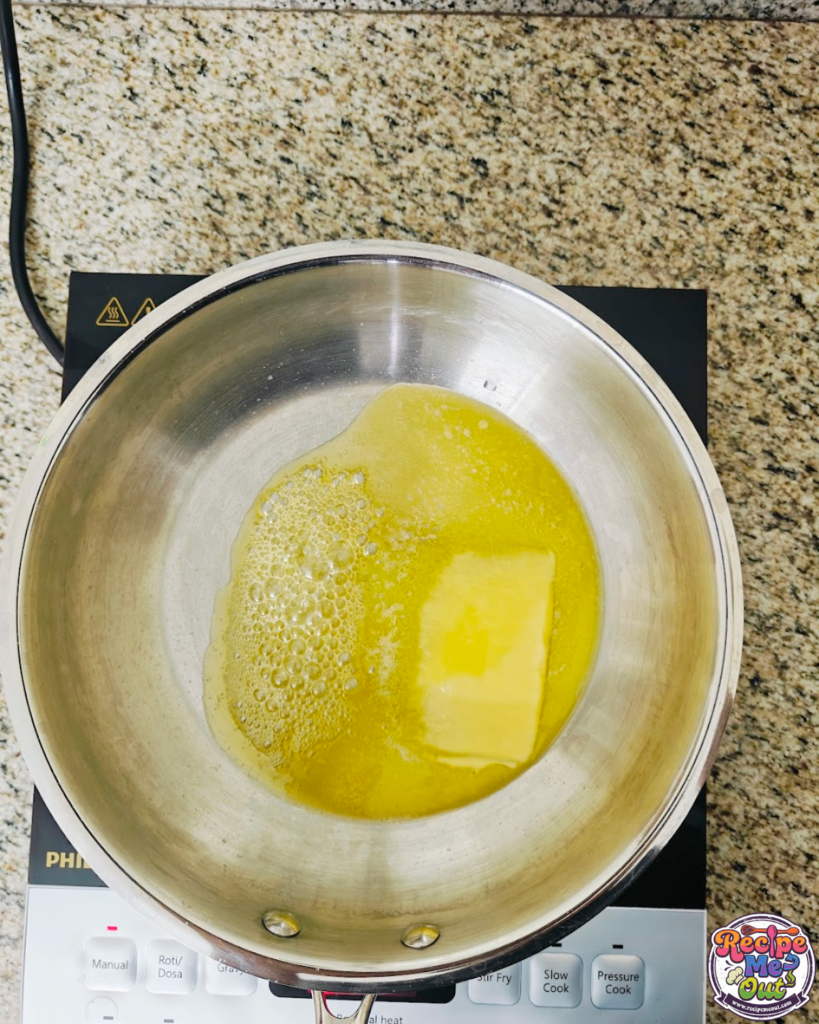
Add the minced garlic to the melted butter.
Gently sauté the garlic for 30–60 seconds, just until it becomes fragrant. Do not brown the garlic—burnt garlic will turn bitter and overpower the sauce. You’re aiming for a soft, aromatic base.
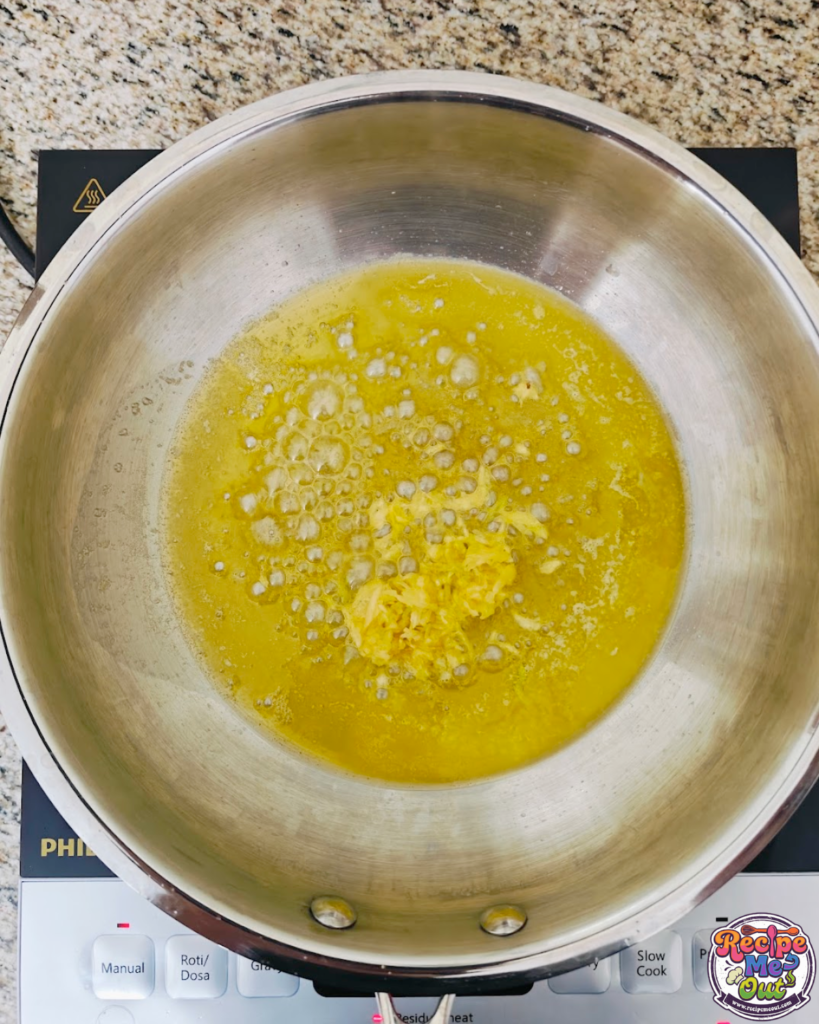
Once the garlic is fragrant, slowly add the cream. Stir continuously to help the butter and cream emulsify into a smooth mixture.
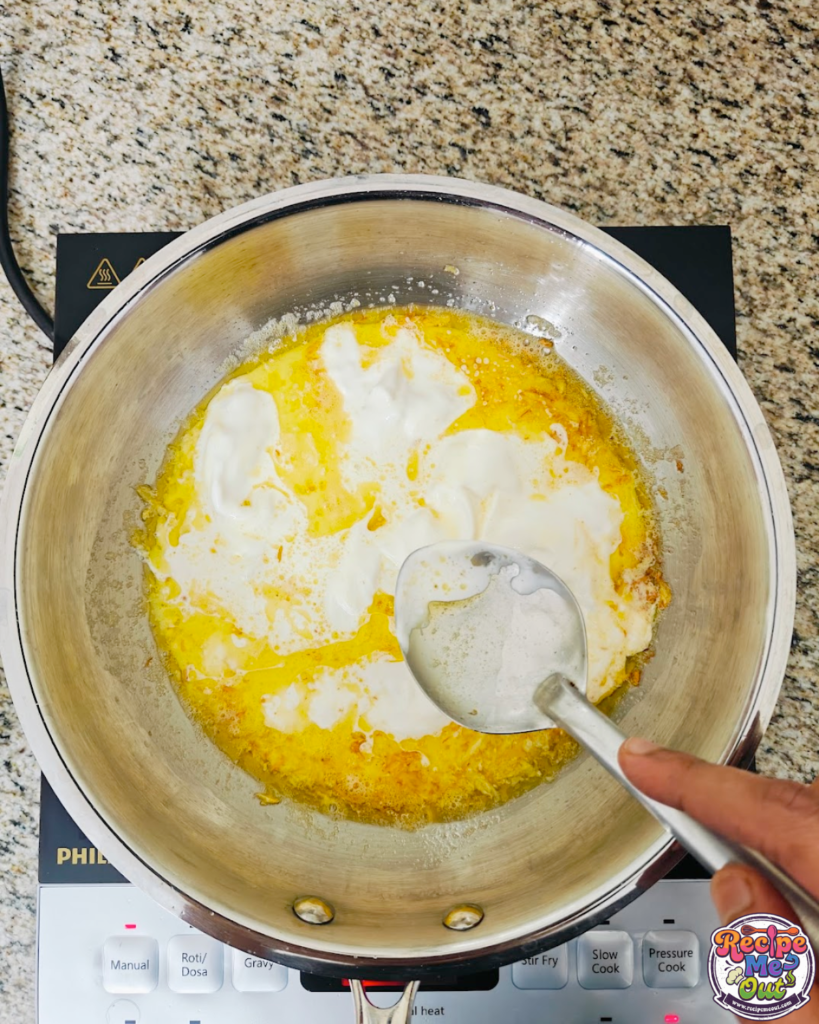
Let the sauce warm up gradually, not boil. You should see gentle steam, not bubbles.
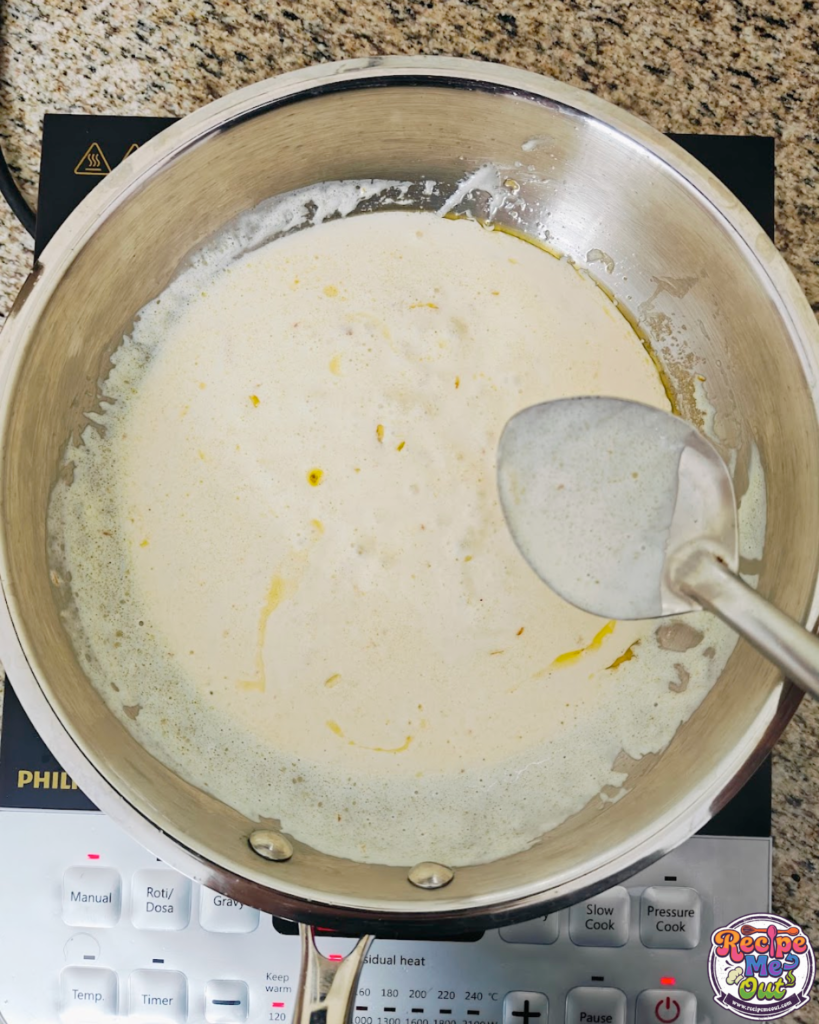
On the side, freshly grate the Parmesan cheese and keep it ready. Freshly grated cheese melts far better than pre-grated versions and helps achieve that luxurious, silky texture Alfredo is known for.
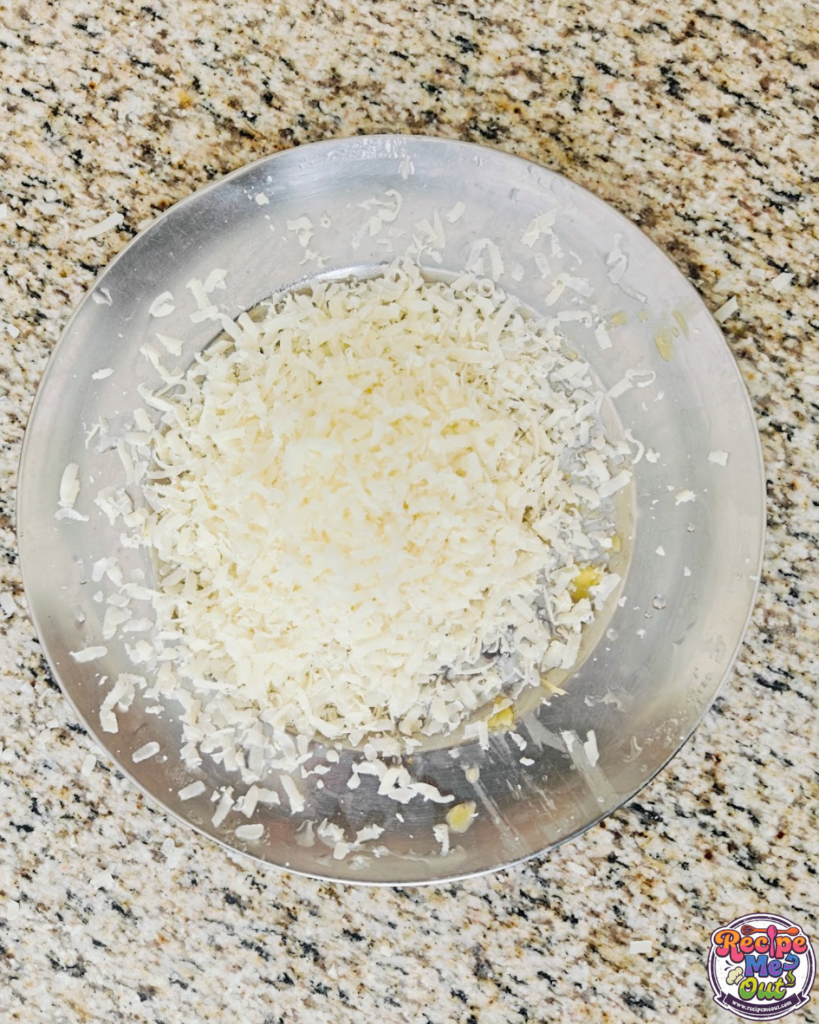
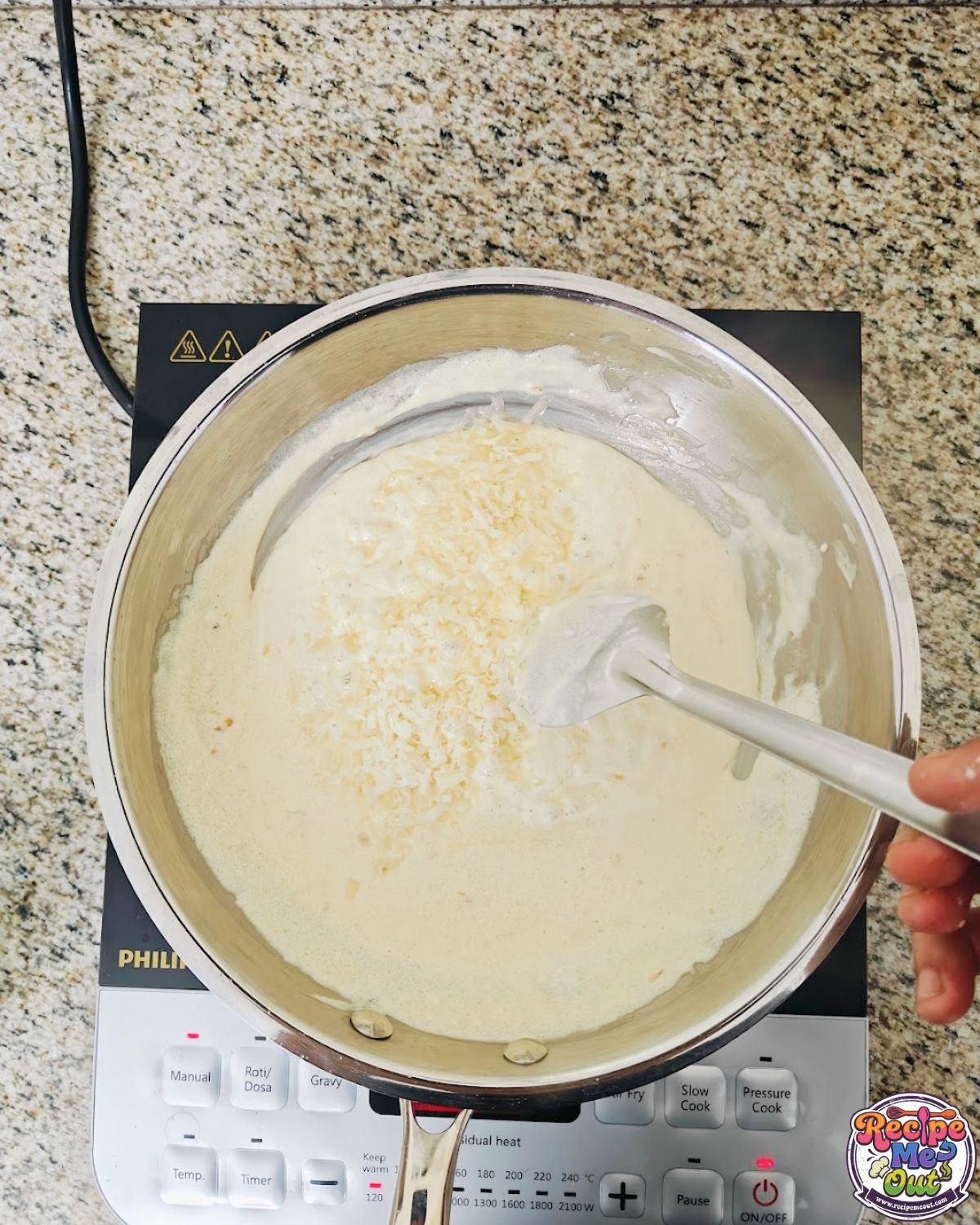
Add the Parmesan cheese slowly, a little at a time. Reduce the heat to low, then sprinkle in the grated Parmesan while stirring constantly.
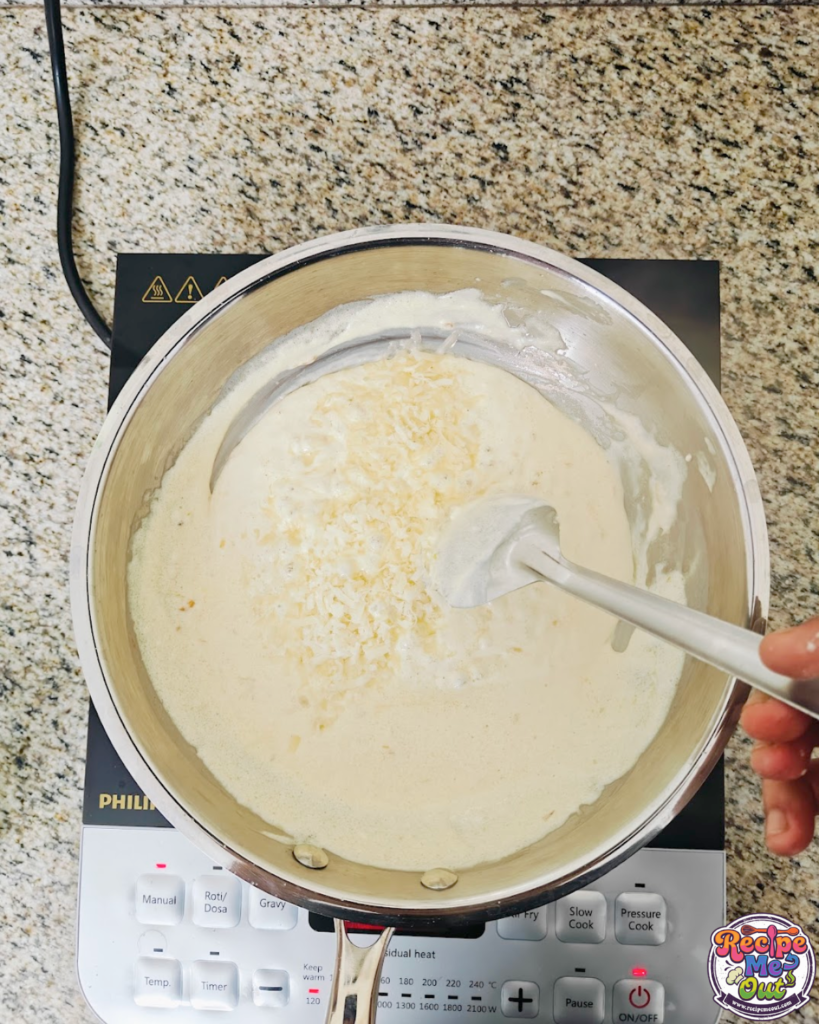
Do not dump all the cheese in at once—adding it gradually ensures the cheese melts smoothly into the sauce without clumping or separating.
Add the garlic powder, black pepper, and dried herbs (⅓ rosemary, ⅓ thyme, ⅓ basil). Stir well so the flavors distribute evenly throughout the sauce.
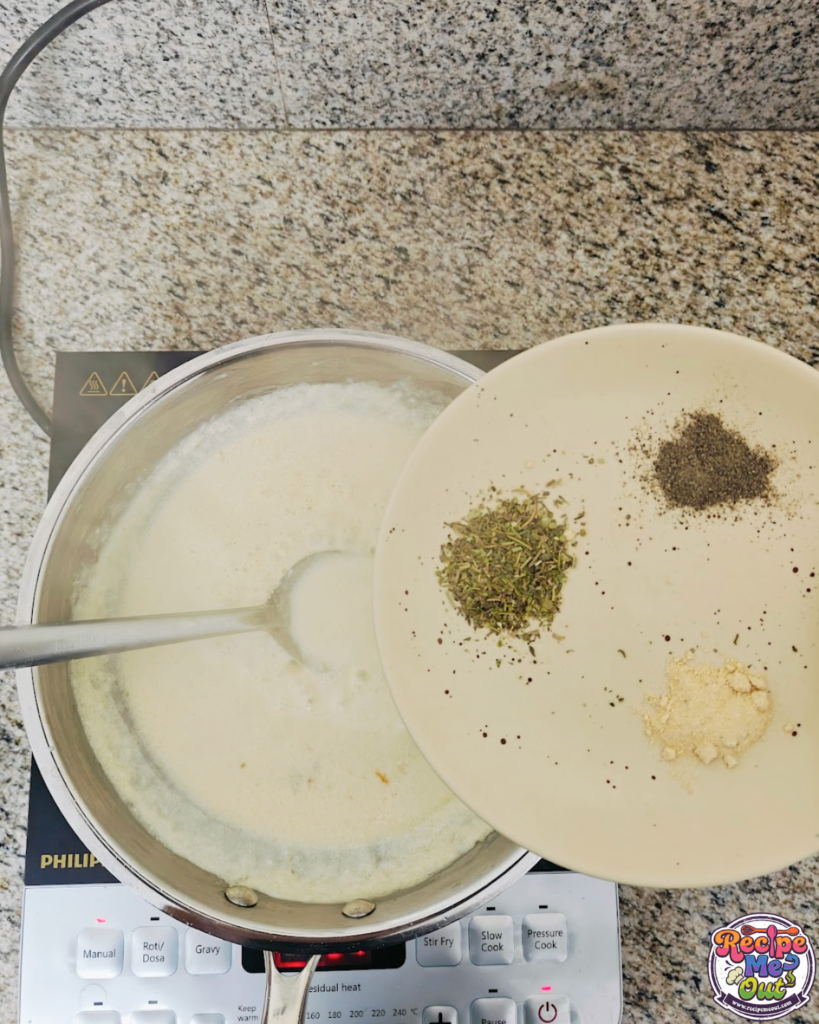
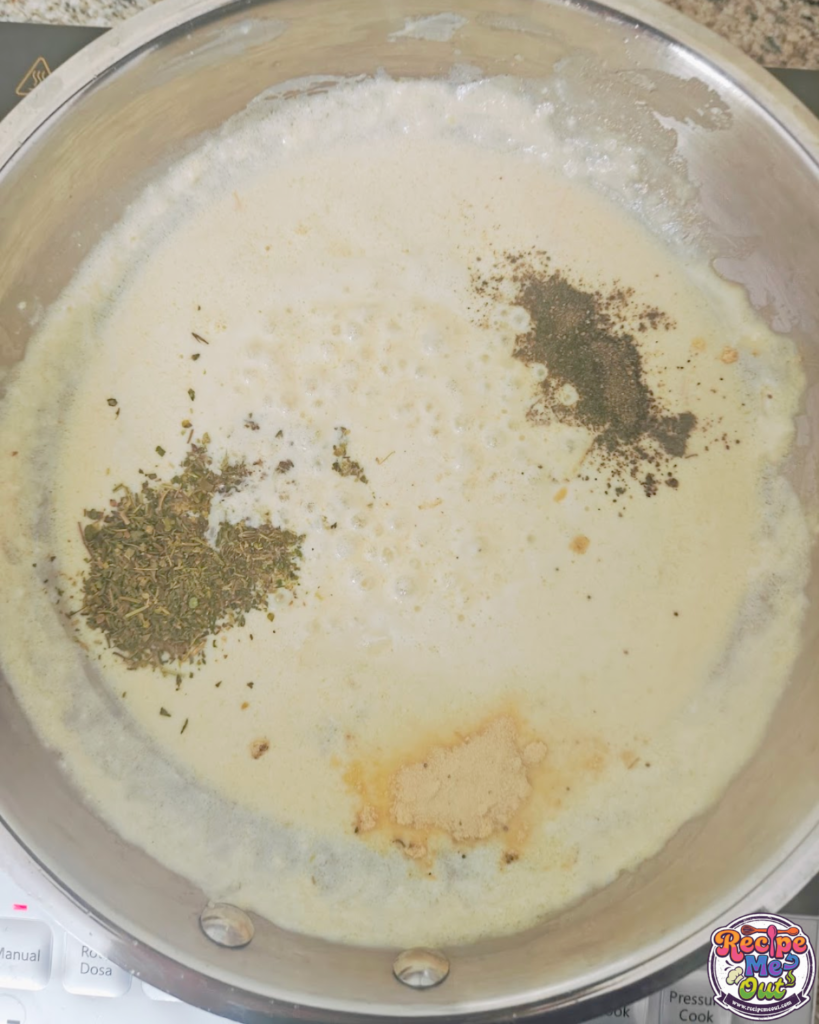
At this stage, add salt carefully, keeping in mind that Parmesan already brings saltiness.
Slow cook and stir patiently.
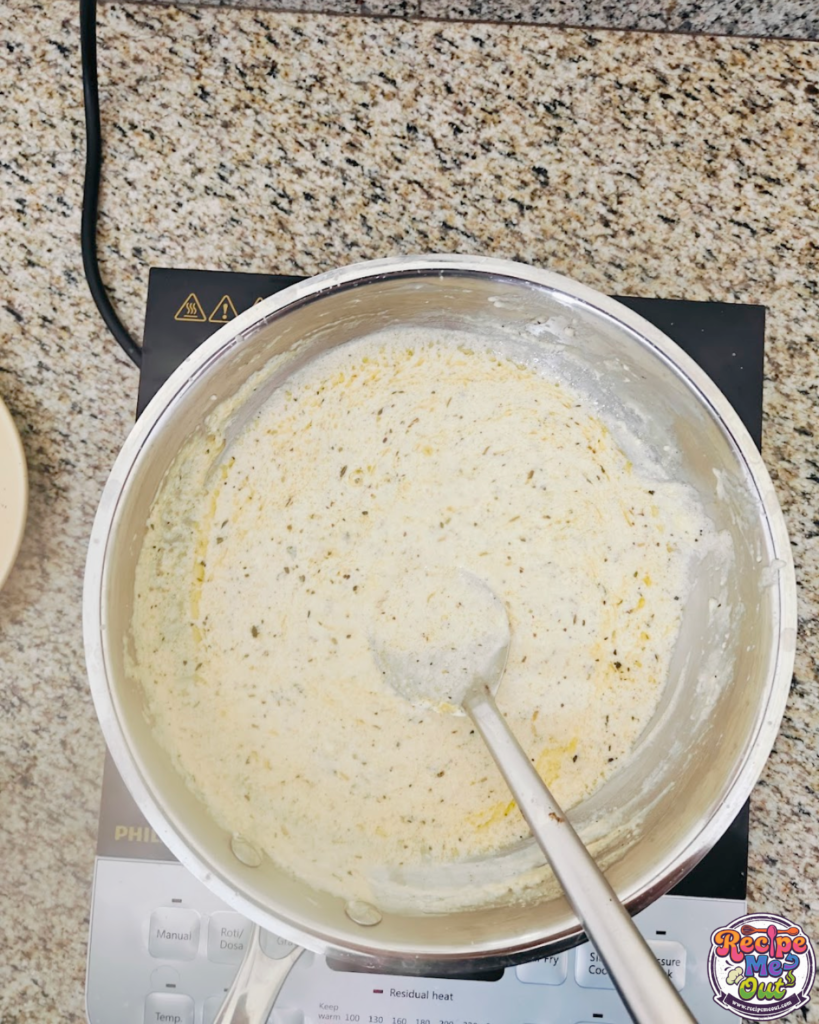
Let the sauce simmer gently on low heat, stirring often.
This step is crucial—you cannot rush Alfredo sauce.
The goal is a smooth, cohesive sauce where the fats remain emulsified. The consistency should be thick enough to coat the back of a spoon, but still fluid like a proper sauce.
Watch closely to prevent oil separation.
If the heat is too high or the sauce is left unattended, the fats may begin to separate. This is not a failure—it’s fixable. Just keep the heat low and continue stirring to maintain a creamy texture.
Serve immediately while hot and silky.
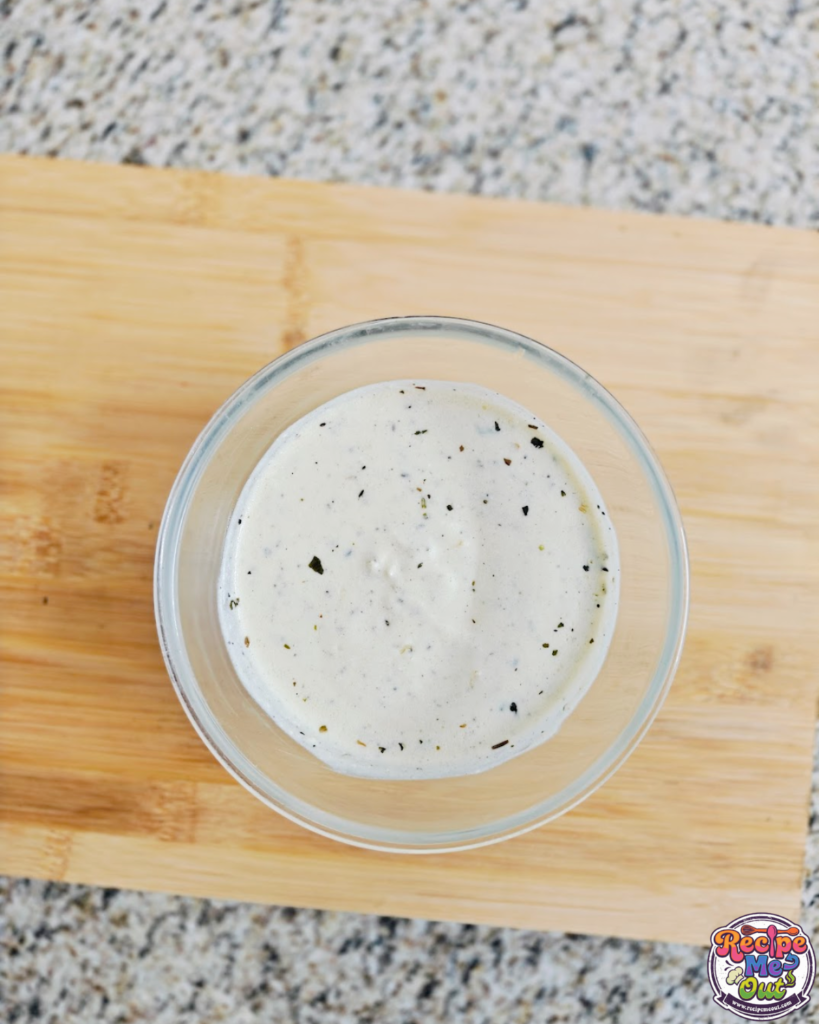
Alfredo sauce is at its best fresh off the stove, when it’s smooth, glossy, and rich. Spoon it over pasta, vegetables, or proteins of your choice and serve right away.
Storage Notes
Once cooled, transfer the sauce to an airtight container and store it in the refrigerator for up to 4–5 days. Reheat gently on low heat, stirring frequently.
Pro Tip (Oil Separation Fix)
If the sauce ever looks broken or oily:
- Add 2 tablespoons of hot water
- Mix vigorously using a spoon or milk frother
This will help the sauce re-emulsify and return to its original creamy consistency.
FAQs
Milk can be used, but the sauce will be much thinner and less rich. Alfredo sauce relies on the fat in cream to create its signature silky texture. If using milk, you may need to add a little extra Parmesan or simmer longer to thicken the sauce.
Oil separation usually happens when the sauce is cooked on heat that is too high or when the cheese is added too quickly. Keep the heat low and add the Parmesan gradually while stirring constantly to maintain a smooth emulsion.
Yes. Once cooled, store the sauce in an airtight container in the refrigerator for up to 4–5 days. Reheat gently on low heat while stirring frequently to restore the creamy consistency.
Yes, it makes a big difference. Freshly grated Parmesan melts more smoothly and helps create the classic silky Alfredo texture, while pre-grated cheese often contains anti-caking agents that can make the sauce grainy.
Alfredo sauce is very versatile. It pairs well with grilled chicken, shrimp, roasted vegetables, baked potatoes, or even as a creamy base for casseroles and baked pasta dishes.
Alfredo Sauce
Ingredients
- 2 tbsp unsalted butter
- 3 cloves garlic minced
- 1 cup heavy cream
- ¾ cup freshly grated Parmesan cheese
- ½ tsp garlic powder
- ½ tsp black pepper
- 1 tsp dried herbs (⅓ rosemary, ⅓ thyme, ⅓ basil)
- Salt to taste
Instructions
- Heat a wide, heavy-bottomed pan over low to medium heat. Add the unsalted butter and allow it to melt slowly.
- Add the minced garlic to the melted butter and sauté gently for 30–60 seconds until fragrant. Avoid browning the garlic to prevent bitterness.
- Slowly pour in the cream while stirring continuously to help the butter and cream emulsify. Let the mixture warm gradually without boiling.
- Freshly grate the Parmesan cheese and keep it ready. Fresh cheese melts better and creates a smoother sauce.
- Reduce the heat to low. Add the grated Parmesan a little at a time while stirring constantly to ensure smooth melting.
- Add garlic powder, black pepper, and the dried herb mix (rosemary, thyme, basil). Stir well to distribute the flavors evenly.
- Taste and add salt only if needed, as Parmesan already contributes saltiness.
- Continue cooking on low heat, stirring frequently, until the sauce thickens enough to coat the back of a spoon.
- Once smooth and glossy, remove from heat and serve immediately over pasta, vegetables, or proteins.
Notes
Pro Tip – Fixing Oil Separation
If the sauce looks oily or separated:- Add 2 tablespoons hot water
- Mix vigorously using a spoon or milk frother
[…] need to make the Alfredo Sauce first. I already made the alfredo sauce a day before and stored […]
[…] My Alfredo Sauce Recipe […]